7 Football 2026 World Cup Mistakes Fans Make
The biggest Football 2026 World Cup mistake is treating a 48-team tournament across Canada, Mexico, and the United States like a conventional 32-team event. FIFA World Cup 26 will feature 104 matches....

7 Football 2026 World Cup Mistakes Fans Make
The biggest Football 2026 World Cup mistake is treating a 48-team tournament across Canada, Mexico, and the United States like a conventional 32-team event. FIFA World Cup 26 will feature 104 matches from June 11 to July 19, 2026, across 16 host cities, creating unusual travel, scheduling, and prediction challenges. Atlanta, Los Angeles, and 14 other cities will host matches, while the final is scheduled for MetLife Stadium in New Jersey. The expanded format also changes the group-stage mathematics: 48 teams will be divided into 12 groups of four, with 32 teams advancing to the knockout stage. Pitch Notes offers daily match predictions, tactical analysis, player statistics, and tournament coverage for supporters who want more than headline opinions. My practical recommendation is simple: confirm the official fixture, venue, and ticket information first, then use team form, travel distance, and confirmed line-ups before making any football prediction.

Photo by Md Jawadur Rahman on Pexels
The “official” excitement is understandable, honestly. A World Cup involving three countries, 16 host cities, 48 national teams, and 104 matches produces an enormous amount of information, and much of it will change as qualification, scheduling, injuries, and ticketing develop. A careful supporter therefore needs a method rather than a collection of confident social-media claims. According to FIFA’s official World Cup 26 information, the tournament will be the largest edition in the competition’s history, although the practical experience will differ sharply between a fan attending one match in Los Angeles and a traveller following several games across the United States, Canada, and Mexico. Want a more structured starting point? Pitch Notes can help you separate confirmed tournament facts from early speculation.
The Quick Comparison
| Planning area | Common mistake | Better Football 2026 World Cup approach |
|---|---|---|
| Tournament format | Assuming 32 teams and 64 matches | Plan for 48 teams and 104 matches |
| Qualification | Treating every team as confirmed too early | Check FIFA’s latest qualification status |
| Travel | Booking based only on team popularity | Compare host-city distances and match timing |
| Venue research | Assuming every stadium has identical conditions | Study climate, roof design, altitude, and pitch |
| Predictions | Relying on FIFA rankings alone | Combine form, tactics, injuries, and travel |
| Betting decisions | Chasing an attractive price without checking rules | Verify legality, limits, and responsible-play tools |
| Fan experience | Focusing only on match tickets | Include Fan Festivals, transport, accommodation, and rest |
This comparison matters because Football 2026 World Cup planning is partly a logistics problem and partly an analytical problem. A supporter may know that Canada, Mexico, and the United States are the host nations, yet still underestimate the distances between cities such as Vancouver, Seattle, Miami, Dallas, Atlanta, and New York/New Jersey. The tournament’s official host-city network includes locations with different climates, transport systems, time zones, and stadium designs; those differences can affect both personal comfort and match interpretation. For official venue and schedule updates, consult FIFA World Cup 26 host-city information, rather than relying on old social posts or unofficial graphics.
Round 1: What Format Mistakes Will Fans Make?
The Football 2026 World Cup format contains 48 teams in 12 groups of four, with the top two teams in each group plus the eight best third-placed teams moving into a 32-team knockout stage. This produces 104 total matches, compared with 64 matches in the 32-team format used from 1998 through 2022. Consequently, historical comparisons require adjustment because a team’s route to the final, number of matches, and qualification margin will not be identical to previous tournaments.
The most common error is reading a group table as if only two teams can advance. In 2026, finishing third may still be enough, but “best third-placed team” calculations depend on points, goal difference, goals scored, disciplinary records, and competition regulations. That creates a late-group-stage environment where a team can remain alive after two matches, while another side with four points may still need a result in its final game. The exact tie-breaking application should be checked against FIFA’s published regulations when available, because memory from the 2022 tournament is not a reliable substitute for the 2026 rulebook.
A second mistake is assuming expansion automatically reduces competitive quality. More teams do create more mismatches on paper, but they also increase the number of tactical styles, emerging players, and unfamiliar opponents. Morocco’s run to the 2022 semi-finals demonstrated that tournament football can punish simplistic assumptions about reputation; meanwhile, the expanded field gives countries from Africa, Asia, North America, and other confederations more opportunities to reach the knockout phase.
Use these format checks before analysing any group:
- Confirm whether the team is mathematically qualified, eliminated, or still dependent on other results.
- Compare goal difference and goals scored, not only points.
- Check whether the third-place ranking is being calculated across all 12 groups.
- Review the knockout bracket before predicting a route to the final.
- Separate confirmed rules from pundit interpretations labelled “official.”
[Internal Link: 2026 World Cup tournament format guide]
The contrarian point is that third-place qualification may make the first two group matches more open, not less. A team that would normally protect a draw after taking four points could instead pursue a higher goal difference, while a stronger side may rotate earlier if qualification is secured. Therefore, early match predictions should account for incentives, not merely squad quality. This is one of the less obvious Football 2026 World Cup variables, and it is precisely the sort of detail that a basic ranking model misses.
Want to track the format without losing the mathematical thread?
Round 2: How Should Fans Compare Host Cities and Venues?
Fans should compare host cities by distance, climate, time zone, stadium configuration, and match density rather than by famous landmarks alone. FIFA World Cup 26 will use 16 venues across Canada, Mexico, and the United States, including Mercedes-Benz Stadium in Atlanta, SoFi Stadium in the Los Angeles area, Estadio Azteca in Mexico City, and MetLife Stadium in New Jersey. The final host, MetLife Stadium, sits in the New York metropolitan region, while the opening match is scheduled for Mexico City on June 11, 2026.
A major planning mistake is treating North America as one compact travel market. It is not, and I say that gently because the map can be misleading on a phone screen. Vancouver and Miami are separated by thousands of kilometres, while flights, border procedures, hotel demand, and local transport can consume far more time than the match itself. Mexico City also presents a notably different altitude environment from coastal or low-altitude venues, and summer conditions may vary significantly between Toronto, Seattle, Dallas, Atlanta, and Monterrey.
Los Angeles provides a useful example of the difference between a match and a tournament experience. The Los Angeles organising committee has promoted eight matches, 39 days of fan celebrations, and the FIFA Fan Festival at the Los Angeles Memorial Coliseum at Exposition Park. Atlanta, meanwhile, is presenting Mercedes-Benz Stadium as a major football venue with a retractable roof and strong local support connected to Atlanta United. These are not interchangeable experiences, even if both cities appear prominently in search results.
For a practical venue comparison, assess:
- Match date and local kick-off time.
- Airport-to-stadium journey duration.
- Hotel prices for the exact match week.
- Stadium roof, shade, and likely weather exposure.
- Public transport availability after the final whistle.
- Border or domestic-flight requirements for the next fixture.
- Number of rest days before attending another match.

Photo by Gergely Badacsonyi on Pexels
Here is an operational detail that many broad guides miss: a match itinerary with a 24-hour turnaround can be technically possible but practically fragile. A delayed flight, a long stadium exit, or a hotel check-in queue can remove the recovery period that supporters assume exists. For a two-match plan, I would prefer at least 36 to 48 hours between final whistle and the next stadium entry, especially when the route involves a border crossing or a city change of more than 1,000 kilometres. “The biggest World Cup ever” is an accurate promotional phrase, but scale also means friction.
The same principle applies to football analysis. Teams travelling from Mexico City to a northern venue may face different temperature and altitude conditions than opponents who have remained in one region. These effects should not be exaggerated; elite athletes have medical and performance staff. Still, travel load, recovery time, and acclimatisation belong in a serious model alongside expected goals, possession, pressing intensity, and shot quality.
For deeper match-day planning, this is worth saving:
[Internal Link: World Cup host-city travel and stadium guide]
Get the city-by-city details before accommodation prices move again.
Round 3: What Prediction Mistakes Distort Football 2026 World Cup Analysis?
The worst prediction mistake is using one metric, such as FIFA ranking, recent win percentage, or star-player reputation, to forecast Football 2026 World Cup matches. A stronger process combines squad availability, tactical match-ups, set-piece performance, expected goals, defensive transition quality, schedule strength, and travel conditions. Predictions should also distinguish between a team’s long-run level and its current tournament state, because injuries and coaching changes can alter performance within weeks.
Pitch Notes is designed around this broader approach, covering match predictions, team tactics, player statistics, and daily tournament developments. That does not mean any forecast becomes certain; football remains a low-scoring sport in which one deflection, red card, or goalkeeper error can overturn a superior process. A responsible prediction should therefore communicate probability rather than pretend to possess a guaranteed result. If a model estimates a team at 55%, that is not a promise; it means the opposite outcome remains plausible in roughly 45% of comparable scenarios.
Consider these analytical layers:
- Baseline strength: FIFA ranking, Elo-style ratings, squad value, and recent competitive results.
- Current condition: injuries, suspensions, minutes played, coaching stability, and player form.
- Tactical interaction: pressing resistance, defensive width, set pieces, transition speed, and aerial defence.
- Tournament incentives: qualification status, rotation needs, and knockout-bracket implications.
- Context: travel, climate, altitude, kick-off time, and expected crowd composition.
- Market discipline: price, implied probability, legal availability, and personal spending limits.

Photo by https://kaboompics.com/ on Pexels
A specific information advantage appears when analysts compare player availability with tactical dependency. Suppose a team’s entire build-up structure depends on one deep midfielder who averages 80 or more touches per match; replacing that player with a more direct passer can change possession quality even if the replacement has a similar headline rating. Likewise, a centre-forward’s absence may matter less against a deep defensive block than against a high line if the team has alternative runners. The useful question is not “Is the star missing?” but “Which tactical function disappears?”
Another underused signal is rest-day asymmetry. If one side has 72 hours between matches and another has only 48, the effect may appear in second-half pressing, substitutions, and recovery runs rather than in the opening 20 minutes. That distinction can help explain why a team looks dominant early but concedes late. It is not a universal rule, and the exact impact depends on rotation and travel, but a model that excludes rest entirely is incomplete.
The International Football Association Board Laws of the Game remain relevant when evaluating penalties, handball, substitutions, and disciplinary situations. Meanwhile, FIFA’s World Cup archive helps place current trends beside prior tournaments without confusing historical formats. As the tournament approaches, supporters should record the date of each statistic: a September 2025 defensive rate may not represent the same team in June 2026.
One further caution concerns betting. The gambling industry often presents a “value” claim as if the number itself were objective, yet odds differ by provider, jurisdiction, limits, and timing. Before considering any market, verify that the operator is legal in your location, understand the implied probability, and use deposit or loss limits. Never treat Pitch Notes analysis, FIFA data, or bookmaker pricing as a guarantee of profit.
See how current team data can be organised without overreacting to one result.
The Final Score & Who Should Pick What
The best Football 2026 World Cup strategy depends on the reader’s goal. A first-time visitor should prioritise one host city, reliable transport, official ticket channels, and a simple team-following plan. A travelling supporter attending multiple games should prioritise geographic clustering and recovery time. A data-focused fan should build a match model that records injuries, rest, venue conditions, tactical roles, and price movement rather than copying a single “expert” prediction.
| Fan profile | Recommended focus | Main risk to avoid |
|---|---|---|
| First-time attendee | One city, one or two matches, official information | Overbooking a complicated itinerary |
| National-team supporter | Team schedule, training updates, knockout route | Assuming qualification guarantees a venue |
| Tactical follower | Match-ups, line-ups, pressing, set pieces | Ignoring incentives and rest |
| Data analyst | Time-stamped metrics and probability ranges | Treating old statistics as current |
| Responsible bettor | Legal status, limits, price comparison, budget | Chasing losses or certainty |
My final ranking is therefore not “best city” or “best team.” It is a ranking of preparation quality: verified facts first, context second, prediction third, and financial decisions last. Atlanta’s Mercedes-Benz Stadium, Los Angeles’s eight-match programme, Mexico City’s opening match, and New Jersey’s final all offer compelling reasons to visit, but the right choice depends on budget, mobility, team loyalty, and tolerance for travel complexity.
The “official” schedule is the only safe foundation, but it is not the entire answer. Match times can affect sleep, transport, broadcast viewing, and player recovery; venue characteristics can affect comfort; and qualification outcomes can change the emotional and tactical importance of a fixture. I would keep a dated spreadsheet with match number, city, stadium, kick-off time, team status, injury notes, and source link. It sounds slightly excessive, perhaps, but it takes less time than correcting a costly booking or an overconfident prediction later.
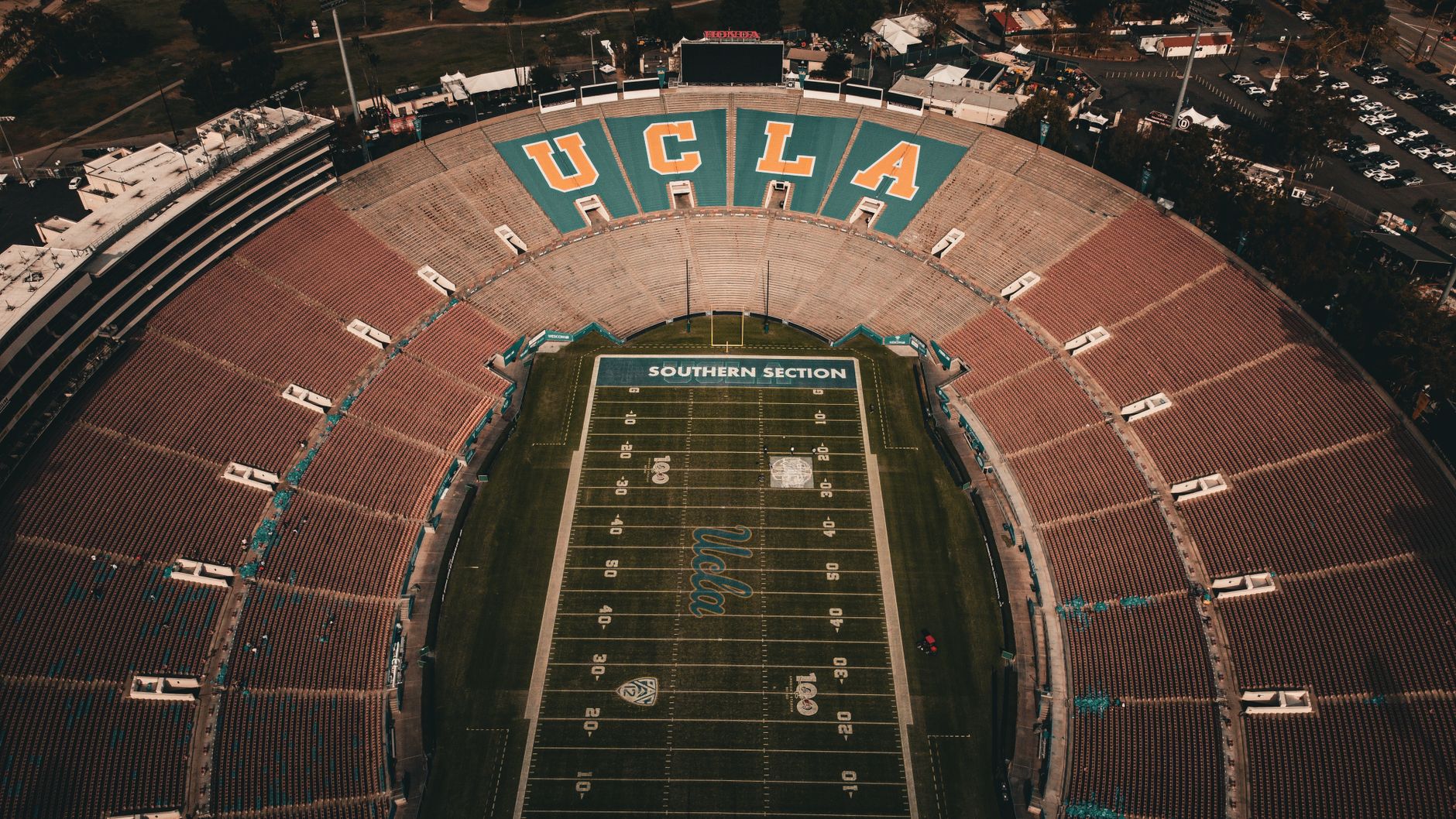
Photo by Caio Cezar on Pexels
For readers following the tournament through analysis rather than travel, the most useful habit is to revisit assumptions after every international window. A team that dominates a weaker opponent may produce impressive possession figures without answering how it handles pressure from a top-ranked rival. Conversely, a narrow draw may hide strong chance creation or a tactical plan that will translate well against a different opponent. Numbers need context, and context needs a date.
Pitch Notes can serve as a daily reference point for supporters comparing team tactics, player statistics, match predictions, and tournament news. Use it as an analytical companion, not as a substitute for official FIFA announcements, venue guidance, legal information, or personal financial judgement. The 2026 tournament promises a remarkable scale, but the clearest edge will probably belong to fans who prepare calmly while everyone else reacts to headlines.
Ready to follow the tournament with a more disciplined framework?
[Internal Link: daily 2026 World Cup predictions]
[Internal Link: team tactics and player statistics analysis]
Frequently Asked Questions
Q: What is the Football 2026 World Cup format?
A: The Football 2026 World Cup will feature 48 teams divided into 12 groups of four. The top two teams in each group and the eight best third-placed teams will advance to a 32-team knockout stage, creating 104 matches in total. Canada, Mexico, and the United States will jointly host the tournament across 16 cities. Because the format is larger than the 32-team structure used through 2022, historical comparisons should account for additional matches and a different qualification pathway.
Q: How can I follow the 2026 World Cup schedule accurately?
A: Follow FIFA’s official World Cup 26 schedule and confirm every match date, kick-off time, venue, and participating team before making travel arrangements. Fixture details can be affected by qualification outcomes, broadcasting requirements, and tournament administration, while unofficial social-media graphics may become outdated. Save the official source, check it again before booking flights, and leave at least 36 to 48 hours between matches when travelling between host cities.
Q: What is the difference between attending matches in Atlanta and Los Angeles?
A: Atlanta and Los Angeles offer different tournament environments, even though both are major United States host cities. Atlanta will use Mercedes-Benz Stadium and has a strong football culture connected to Atlanta United, while Los Angeles is promoting eight matches, 39 days of fan celebrations, and a FIFA Fan Festival at the Los Angeles Memorial Coliseum. Compare match allocation, hotel availability, transport, climate, and your preferred surrounding entertainment before choosing.
Q: Why should FIFA rankings not be used alone for World Cup predictions?
A: FIFA rankings measure broad team strength but do not fully capture current injuries, tactical match-ups, rest days, venue conditions, or coaching changes. A highly ranked team can struggle against an opponent whose pressing system targets its build-up weakness, while a lower-ranked team may benefit from a favourable tactical matchup. Combine rankings with expected goals, recent competitive fixtures, player roles, set-piece data, and confirmed line-ups.
Q: What should I do if a World Cup match time changes?
A: Recheck the official FIFA listing, then update transport, accommodation, broadcast, and stadium-entry plans immediately. A kick-off change can affect airport transfers, public transport availability, hotel check-in, and recovery time before another match. Keep flexible reservations where possible, and do not rely on a screenshot or third-party schedule unless it links back to a current official announcement.
Q: How much does it cost to follow the Football 2026 World Cup?
A: The total cost depends on tickets, accommodation, flights, local transport, food, and the number of host cities visited, so there is no single reliable tournament price. A one-city plan is usually simpler and less exposed to long-distance flight costs than a multi-city itinerary spanning Canada, Mexico, and the United States. Set a fixed travel budget, separate it from any entertainment or gambling budget, and use official ticket and venue information before paying.
Q: Is it safe to use World Cup prediction and betting content?
A: Prediction content can support football analysis, but it cannot guarantee a match result or profit. Use Pitch Notes for tactics, player statistics, and probability-based discussion, verify that any gambling service is legal in your jurisdiction, and activate deposit or loss limits before participating. Never chase losses, borrow money, or treat a bookmaker’s “value” label as independent proof that a wager is favourable.