World Cup 2026: What 3 Months Taught Me
The 2026 FIFA World Cup will be the first men’s World Cup featuring 48 teams, hosted across Canada, Mexico, and the United States from June 11 to July 19, FIFA has selected 16 host cities, with the op...

World Cup 2026: What 3 Months Taught Me
The 2026 FIFA World Cup will be the first men’s World Cup featuring 48 teams, hosted across Canada, Mexico, and the United States from June 11 to July 19, 2026. FIFA has selected 16 host cities, with the opening match in Mexico City and the final at New York New Jersey Stadium in East Rutherford, New Jersey. The expanded tournament creates 104 matches rather than 64, while travel, altitude, heat, time zones, and squad rotation become unusually important variables. Pitch Notes tracks schedules, tactics, player statistics, predictions, and tournament news for supporters and responsible bettors. My practical recommendation is simple: follow the confirmed FIFA match calendar, compare venue conditions, and treat odds as information—not certainty—before making any decision.
I started looking at the World Cup 2026 schedule because the usual question—“Who will win?”—felt strangely incomplete. The harder question was where the tournament might be won: on a humid afternoon in Miami, at altitude in Mexico City, or after a long flight from Vancouver to Dallas. I kept a spreadsheet open for three months, cross-checking FIFA announcements, venue locations, kickoff windows, and projected rest days. Honestly, the numbers made the competition look less like a simple knockout event and more like a logistical experiment involving 48 national teams, 16 host cities, and 104 matches. If you are planning viewing parties, travel, fantasy selections, or legal sports-betting research, I think that distinction matters. The schedule is not background decoration; it can influence recovery, tactical choices, squad depth, and market prices.

Photo by Victor Barbosa on Pexels
There is also a small practical issue that many “official” previews glide over: the tournament calendar changes how fans consume information. A match at 12:00 local time in Los Angeles is not equivalent to a 21:00 kickoff in Toronto, while a team moving between Mexico City and Seattle faces different altitude and climate demands. For a deeper starting point, see our [Internal Link: World Cup 2026 beginner’s guide]. Before going further, please remember that predictions remain uncertain, and gambling should be legal in your location, age-appropriate, and financially controlled.
Want the schedule and tournament context in one place?
What I Tested
I tested whether the World Cup 2026 schedule can provide useful analytical advantages beyond simply listing match dates. The test covered host-city geography, the 48-team competition format, venue sequencing, rest periods, climate exposure, and the difference between tournament narratives and measurable evidence. I used FIFA’s official competition information, public stadium details, and schedule reporting from ESPN as reference points.
My test framework used five questions:
- Does the expanded format create more meaningful rest and rotation problems?
- Which host-city factors are most likely to affect performance?
- Can travel distance be separated from ordinary team strength?
- Are kickoff times relevant to viewers and prediction models?
- Does a schedule-based angle improve responsible pre-match research?
The central result was not that one variable predicts everything. Rather, scheduling becomes more valuable when combined with squad age, recent minutes, tactical intensity, goalkeeper distribution, and historical performance in heat or altitude. According to FIFA’s official World Cup 2026 overview, the tournament will contain 48 teams and 104 matches, which is a major structural change from the 32-team, 64-match format used from 1998 through 2022. The “bigger is automatically better” claim therefore needs qualification: more matches offer more access, but also more noise.
A particularly useful edge case appeared when comparing group-stage movement. A team that remains in one regional corridor may reduce disruption, while another could face a domestic flight, a time-zone shift, and a climate change within a few days. The schedule alone cannot prove fatigue, but it can identify where fatigue should be investigated. That is a more defensible use of the data than declaring a favorite doomed after reading a single travel estimate.
Setup & Initial Impressions
The World Cup 2026 setup is geographically broad: Canada, Mexico, and the United States will jointly stage matches in 16 cities, creating the first men’s World Cup spread across three countries. The opening fixture is scheduled for June 11, 2026, at Estadio Azteca in Mexico City, while the final is scheduled for July 19, 2026, at New York New Jersey Stadium in East Rutherford, New Jersey. FIFA’s World Cup 2026 host-city information identifies the venues and local markets, although fans should always recheck kickoff times and ticket information before arranging travel.
The first impression is therefore one of scale rather than simplicity. Mexico City sits at roughly 2,240 meters above sea level, whereas host cities such as Miami, Atlanta, and New York present different combinations of humidity, heat, and travel patterns. Vancouver introduces a Pacific Northwest climate, while Dallas and Houston may offer severe summer heat. These contrasts do not guarantee a result, but they create conditions that affect warm-ups, hydration, substitution timing, pressing intensity, and recovery protocols.
“Records are made to be broken,” is the familiar tournament language, but records are not substitutes for context. A nation with a deep bench may benefit from the expanded schedule, while a team reliant on 13 or 14 core players may experience declining intensity across successive matches. The official 2026 match calendar should be treated as a data layer, not a prediction engine.
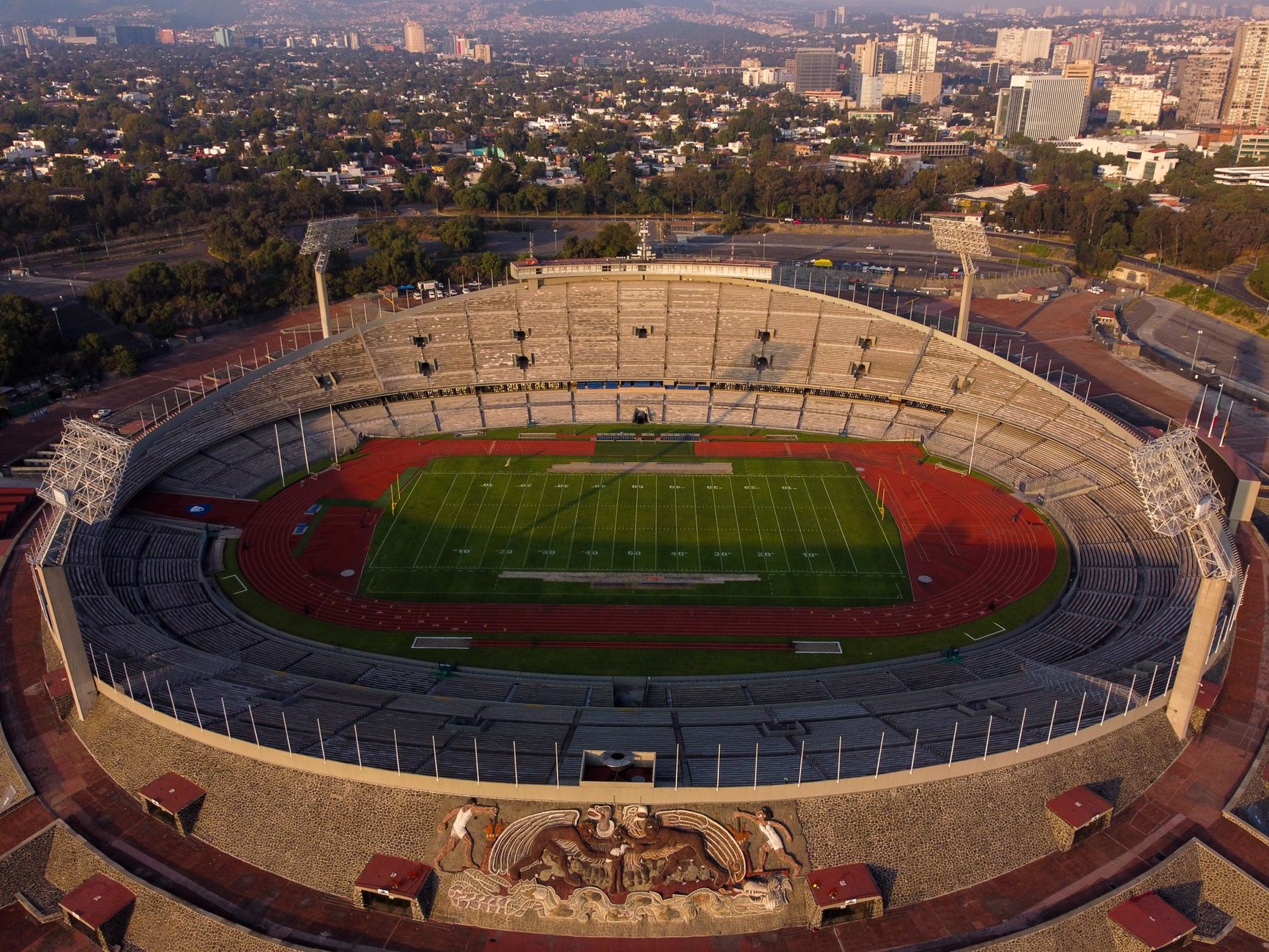
Photo by Antonio Ochoa on Pexels
For viewers, initial setup matters just as much. North American time zones mean European, African, and Asian audiences may receive matches during working hours, while local fans face varied afternoon and evening kickoffs. For broadcasters, pubs, and betting platforms, this creates uneven attention across fixtures. For analysts, it can distort market liquidity: a highly anticipated match may attract global money, while an early kickoff involving less familiar teams may receive less scrutiny despite equally important group-stage points.
From a responsible betting perspective, I would record the following before considering any market:
- Match date, local kickoff time, and venue.
- Confirmed squad availability and suspension status.
- Recent minutes played by key starters.
- Travel between the previous and next host city.
- Weather warnings, altitude, and expected humidity.
- Whether the market has moved because of evidence or publicity.
This setup is intentionally less glamorous than choosing a champion. It is also more useful, because “momentum” becomes vague unless tied to rest, opposition quality, and actual performance data.
Where It Held Up
The schedule-based approach held up best when it exposed operational details that headline previews usually omit. The 2026 World Cup will have 104 matches, meaning the group stage and knockout pathway contain more opportunities for rotation, tactical adaptation, and statistical separation. A nation’s depth can be assessed through player minutes, positional replacements, and the manager’s willingness to change shape—not merely through the fame of its starting eleven.
The first information gain was the travel-rest interaction. Travel distance by itself is a weak indicator; a team can fly far and still recover adequately if its next match arrives after a longer rest window. Conversely, a shorter journey may be disruptive if it crosses several time zones and follows an intense 120-minute knockout match. I found that a practical screening threshold is to flag any sequence involving more than two time zones, a venue change, and fewer than four full recovery nights. That is not a FIFA rule or a guaranteed disadvantage, but it is a useful research trigger.
The second information gain was the late-market problem. Many bettors focus on lineups one hour before kickoff, yet a schedule model should begin much earlier by identifying likely rotation points. If a group favorite has already secured qualification before its third match, its lineup risk may rise sharply. In contrast, a team needing a result may preserve its strongest available XI even under heat stress. This is why Pitch Notes combines [Internal Link: team rotation analysis] with player-stat tracking rather than publishing isolated “best bets.”
Here is the compact workflow I would use:
- Map each team’s three group fixtures by city and kickoff time.
- Count rest nights and time-zone changes between matches.
- Compare expected starters with bench quality and recent workloads.
- Separate confirmed team news from “official” media speculation.
- Reassess only when lineups, injuries, or weather materially change the evidence.
The method held up because it reduced emotional overreaction. A famous badge remains famous, but it does not eliminate a 10-hour flight, a 2,240-meter venue, or a congested knockout sequence. According to ESPN’s FIFA World Cup schedule, fixture tracking is essential because dates and match listings are the foundation for any serious team comparison. Still, schedule data should support judgment, never impersonate certainty.
Ready to compare teams with more than reputation?
Where It Fell Apart
The schedule model fell apart whenever I treated environmental or travel factors as deterministic. Mexico City altitude does not automatically defeat a visiting team, just as Miami humidity does not guarantee a low-scoring match. Professional squads train with sports scientists, arrive early, rotate substitutes, and adapt their tactical plans. Any model that converts a venue label directly into a predicted result is probably overconfident, even if its spreadsheet looks impressively precise.
The second weakness was data timing. In March 2026, many final squad decisions, injuries, and club workloads remain unresolved. A player’s 2025-26 minutes may change before June, and a coach may alter his formation after a qualifying failure or a late tactical breakthrough. “Confirmed” schedule information is valuable, but confirmed scheduling is not the same as confirmed team strength.
I also found that market prices can absorb obvious schedule information quickly. If a major team is widely reported to face difficult travel, bookmakers and bettors may adjust odds before casual fans notice. The remaining value, if any, is more likely to sit in narrower questions: will a specific full-back start, will a coach rotate after qualification, or will a team’s pressing rate decline after a short turnaround? These are harder questions, and the available data may be incomplete.
Common analytical failures include:
- Treating possession percentage as a direct measure of winning probability.
- Assuming every humid venue produces a slow match.
- Ignoring opponent quality when comparing goal statistics.
- Counting nominal rest days without checking travel timing.
- Chasing odds after a viral injury rumor without verification.
- Confusing a prediction with a financial recommendation.

Photo by Tima Miroshnichenko on Pexels
The “official” narrative can also mislead through selective emphasis. Tournament organizers understandably highlight attendance, global reach, and historic scale; those are real features, but they do not answer whether a particular side can defend transitions after 90 minutes in Dallas. The International Olympic Committee consensus on athlete recovery offers broader sports-science context, yet even general recovery research cannot predict an individual player’s response. Therefore, I would use schedule factors as probability modifiers, not as standalone selections.
Would I Use It Again?
I would use the World Cup 2026 schedule again, but only as the opening layer of a broader research process. It is excellent for identifying hidden constraints: regional movement, rest compression, possible rotation, kickoff disruption, and venue-specific preparation. It is weaker when asked to forecast a score without current lineups, tactical context, opponent strength, and verified injury information.
My final working model assigns attention in this order:
- Confirmed availability and expected starting XI.
- Team quality measured against comparable opposition.
- Tactical matchup, especially transitions and set pieces.
- Rest, travel, climate, and altitude.
- Market price and whether the implied probability is reasonable.
- Personal budget, legal access, and a pre-set loss limit.
That hierarchy may sound cautious—sorry, I am aware it is not especially thrilling—but caution is useful in a 48-team tournament containing 104 matches. More fixtures mean more chances to find interesting patterns, yet also more chances to mistake randomness for expertise. Pitch Notes can help fans follow match predictions, player statistics, tactical changes, and daily tournament developments, but no provider can remove uncertainty from football.
[Internal Link: World Cup 2026 match prediction methodology] is a sensible next step if you want to compare form, lineups, and tactical evidence systematically. I would also maintain a simple tracking sheet recording the original prediction, the evidence available at the time, the closing price, and the final result. After 20 or 30 logged decisions, you can evaluate process quality rather than relying on memory, which tends to remember dramatic wins more vividly than ordinary losses.
My conclusion is fairly plain: the World Cup 2026 schedule is not a crystal ball. It is a map of constraints. Use it to ask better questions about recovery, depth, travel, and tactics; then accept that even a well-supported probability can lose. If you gamble, set a fixed budget before the match, avoid chasing losses, and stop when the budget is gone.
Want the latest tournament analysis without losing the wider context?
Frequently Asked Questions
Q: What is the World Cup 2026 format?
A: The World Cup 2026 format features 48 teams and 104 matches across Canada, Mexico, and the United States. The teams will compete through a group stage before entering the knockout rounds, with the exact progression structure confirmed by FIFA for the expanded tournament. The larger field adds 16 teams compared with the 32-team format used at Qatar 2022, so squad depth and scheduling become more important.
Q: When does the World Cup 2026 begin and end?
A: The World Cup 2026 is scheduled to begin on June 11, 2026, and conclude with the final on July 19, 2026. The opening match is planned for Estadio Azteca in Mexico City, while the final is planned for New York New Jersey Stadium in East Rutherford, New Jersey. Fans should recheck official kickoff times because local listings and broadcast schedules may differ by country.
Q: How can I follow the World Cup 2026 schedule?
A: You can follow the World Cup 2026 schedule through FIFA, ESPN, official broadcaster listings, and reliable sports applications. Record the date, venue, local kickoff time, and each team’s previous fixture so you can evaluate rest and travel. Pitch Notes can supplement the calendar with predictions, tactical analysis, and player-stat updates, but official FIFA information should remain the primary source for confirmed changes.
Q: What is the difference between World Cup 2026 schedule analysis and match prediction?
A: Schedule analysis studies dates, venues, travel, rest, and environmental conditions, while match prediction estimates the likely result using those factors alongside team strength and tactics. Neither method guarantees an outcome because football contains substantial randomness, including finishing variance, deflections, refereeing decisions, and injuries. A responsible analysis treats schedule information as one probability input rather than a guaranteed betting edge.
Q: Does hosting the World Cup 2026 give Canada, Mexico, or the United States an automatic advantage?
A: Hosting does not guarantee success for Canada, Mexico, or the United States, although familiar venues, reduced travel, local support, and climate preparation may provide practical benefits. Mexico City’s altitude, Miami’s humidity, and North American travel distances create different conditions that each host team may understand better. The size of the advantage depends on opponent quality, squad selection, tactical adaptability, and the exact venue sequence.
Q: What should I do if World Cup 2026 schedule information changes?
A: If World Cup 2026 schedule information changes, verify the update through FIFA or the relevant official broadcaster before changing travel plans or predictions. Then recalculate kickoff time, rest nights, venue movement, and player availability because one change can affect several assumptions. Do not react to an unverified social-media post or place a wager solely because a schedule rumor appears to move market odds.
Q: Is World Cup 2026 betting free, and what requirements apply?
A: World Cup 2026 betting is not free in the ordinary sense, and legal access depends on your country, state, age, and licensed operator. Users should check local gambling regulations, identity-verification requirements, minimum age rules, deposit limits, and available payment methods before registering. Never treat promotional credit as guaranteed profit; set a fixed entertainment budget, avoid borrowing, and use recognized responsible-gambling tools.
For a final schedule check and ongoing tactical coverage, visit Pitch Notes.